Repair Cafe comes to Thames Ditton
Our first Repair Cafe is in Vital Village (Mercer Close) on Sunday 22 March, 10am-noon.
Please use our Contact Us page to send us details of the item you’d like us to repair, make, model, what’s wrong with it (if you know) etc. We’ll let you know if we can fix it (for free) and give you a time slot.nThis is a volunteer initiative and we’re looking for would-be repairers too so if you’re interested, let us know.
Send us your photos for the 2026 Nature & Climate
Photography Competition (max. of three entries per person)
Competition generously sponsored by Killik & Co Financial Advisers
Local animal life
Local plant life
From the tiniest insect to elusive badgers or vivid green parakeets, our local animals are an endless source of inspiration
Giant oaks, colourful spring bulbs and moss-covered benches - Thames Ditton & Weston Green has it all.
Open category
Local scenery
Could it be a sunset over the Thames or the newly-painted All Saints Church by Marney’s Pond?
Your chance to wow us with the photos you have taken of nature and climate beyond our Surrey borders.
Closing date is Friday 11th September
How to enter
You can send us JPEG attachments via the Contact Us page
What to include
Make sure you tell us your name, email address, age if under 18 and where the photograph was taken was taken
Prizes
Prizes are £50 winner in each category and £25 for highly commended. There is a £30 prize for best photo by someone under 18.
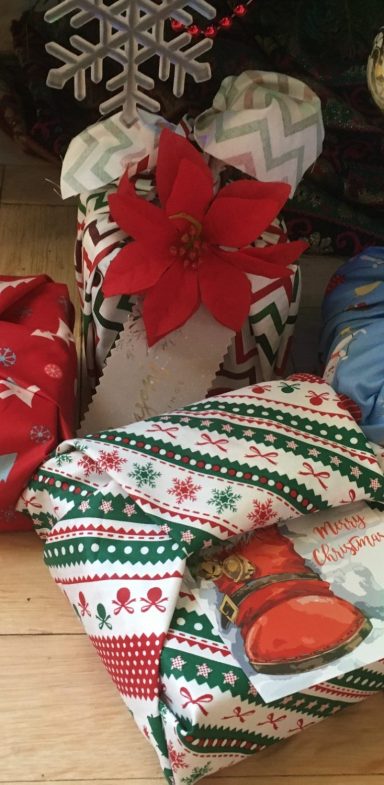

Christmas is a very special time but it can be a hugely wasteful time as well, with massive over-consumption and a surfeit of shiny, glittery things that can’t be recycled. We’re not going go all ‘Bah! Humbug!’ on you, but here are a few hints and tips that can help lower the impact of your Christmas celebrations
1 “It’s beginning to look a lot like Christmas...”
One of the best family traditions is getting down a box of Christmas tree decorations from the attic and re-using the same ones, year-on-year. Ignoring latest trends, colour-schemes and ‘must haves’ offered by expensive retailers is far better for the environment and it’s easier on your pocket too. Our tip is to start small (a small tree needs fewer decorations) and build up a collection over the years. That way you can treat yourself to something special when it catches your eye and as your collection grows you can get a bigger tree. It really isn’t sustainable to ditch all your old decorations and buy boxes of new ones, simply because this year’s Instagram trend is purple.
2 “Deck the halls with boughs of holly...”
Wreaths and boughs of holly, ivy, laurel and firs look fabulous on mantelpieces, window sills, shelves or hanging in bunches on backs of chairs, especially tied with coloured ribbon or fabric strips. You can grow them, collect them from commons (in small quantities) or ask neighbours for some cuttings. Natural decorations can be composted or put in the garden waste collection bins and paper decorations can be recycled.
3 “We wish you a Merry Christmas...”
Postage is really expensive, so it’s better for your pocket and the planet to send charity e-cards instead. There are plenty of websites where you can send personalised e-cards quickly and easily, and donate to charity whilst doing so. If you do send traditional cards, make sure to avoid glitter, foil and shiny finishes which make them unrecyclable and buying them from an environmental charity like the Wildlife Aid Foundation, Woodland Trust or the Worldwide Fund for Nature helps their work too.
4 “Oh Christmas Tree…”
There is plenty of debate about the relative benefits of real trees versus plastic trees. Some argue that the carbon footprint of a plastic tree is effectively written-off if you use it for more than ten years. Even real trees have a carbon footprint and consume water as well. There is no definitive answers. But have you ever considered renting a Christmas tree? You choose the size you want and collect it from a depot, then you can take it home and decorate it as you wish. You just have to keep it watered over the Christmas period and, when Christmas is over, you return it to the depot and it goes back to the farm to carry on growing. It’s about as sustainable as it gets. Vital Village in Thames Dittonis a depot for London Christmas Tree Rental. (www.vitalvillage.co.uk)
5 “We three Kings from Orient are…”
Travelling to visit friends and family is a Christmas tradition, but remember, if you are doing a long journey it is usually much more carbon-efficient to take the train and if you book in advance and can take advantage of rail cards or special offers, it can work out cheaper as well - even with four people in a car (and a lot more so for solo journeys.)
6 “Bearing gifts we traverse afar...”
Between us we use over 220,000 miles of wrapping paper every Christmas! Plain paper can be recycled, but anything shiny or foil or glittery (and there’s lots of it about) cannot be recycled. What a terrible waste! Please: use fabric, make gift bags from old paper, re-use old, pretty boxes collected in the past or just tie a ribbon round it with a bundle of greenery and a hand-made gift card. The Japanese have perfected the art of Furoshiki: wrapping gifts in re-usable fabric. We’re big fans of it as it is a timeless, elegant craft and wrapped items always look great and unusual. We have a mini-masterclass on how to do it in Live Life Better, our handbook for sustainable living.
7 “Santa baby, hurry down the chimney tonight….”
The most sustainable Christmas decision is avoid buying more stuff! Do we really need more things in our lives? Alternatives gift giving includes experiences like local trips, vouchers for local restaurants or favourite hair or or spa treatments; hampers of plastic-free treats; home-made plastic-free handicrafts; memberships of clubs and groups (especially environmental ones); bird boxes and bird feeders; donations to wildlife charities/adopt an animal schemes. A great sustainable rule for gift giving in general is quality, not quantity. One good quality item that will last is always better than any number of poorer quality, throw-away items that end up in landfill. Don’t shy away from buying second-hand either - how wonderful to receive a bundle of pre-loved, carefully chosen books, perhaps with a box of tea and some biscuits? Or some pretty china plates with a selection of cheeses, or a crystal tumbler with a bottle of of your favourite tipple?
8 “Ye who now will bless the poor, shall yourselves find blessing…”
Remember, many families are struggling financially at Christmas, so why not have a clear out of your good-as-new items before Christmas and take them to a charity shop? Re-using items in great condition in a circular economy is one of the best lifestyle choices we can make. Unfortunately many of us leave the clear out until January when we suddenly realise how much new stuff we’ve got to find space for in our cupboards, but Charity Shops need gift-able things like toys, games and good quality clothes NOW! So get sorting….
9 “Here we come a-wassailing…”
Almost 20% of the food we buy in this country ends up going straight in the bin and at Christmas it is particularly tempting to over-cater or buy speciality food items that no-body actually eats. Try to keep food waste to a minimum by planning your meals in advance, making a shopping list and sticking to it, using up leftovers at the next meal (you can put practically anything in a soup!) and donating any surplus to a Community Fridge. Or better still - invite the neighbours round (especially anyone lonely or isolated) and encourage everyone to tuck into the a ‘leftovers’ party.
10 “It’s the most wonderful time of the year…”
But why not make 2026 even better? You can ‘Live Life Better’ all year round by following the tips in our sustainable living handbook. It’s accessible free of charge online, but you can also buy a beautifully-produced, full colour copy available on a print-to-order basis (so no wastage) from Amazon. It would make a great, useful Christmas gift for anyone who wants to start making a difference to their carbon footprint.
Happy Christmas!
20
NOV
2025
In Conversation: meeting one of the founders of Earth Day
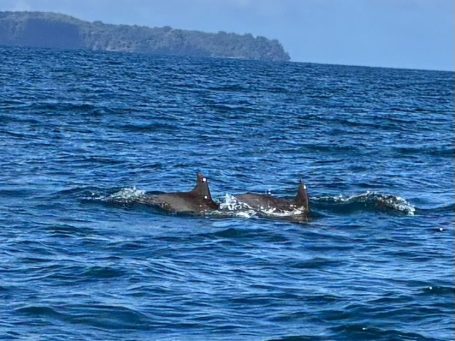
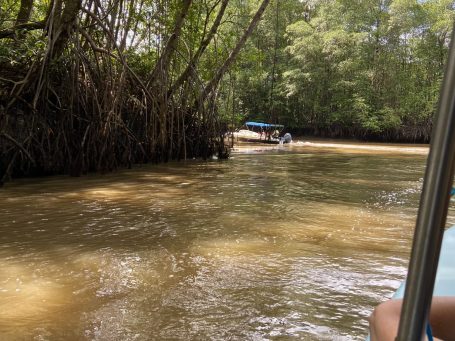
Aquila de Osa in Drake Bay, Costa Rica, is a lush, green haven on the Pacific coast, accessible only by boat or – in the dry season – by fording several streams and crossing miles of unmade rough tracks in a 4x4. For those who do make the journey, the reward is a tropical rainforest bright with the colours of toucans, macaws and hummingbirds, fronting a picturesque bay with (if you are lucky) glimpses of whales, dolphins and turtles.
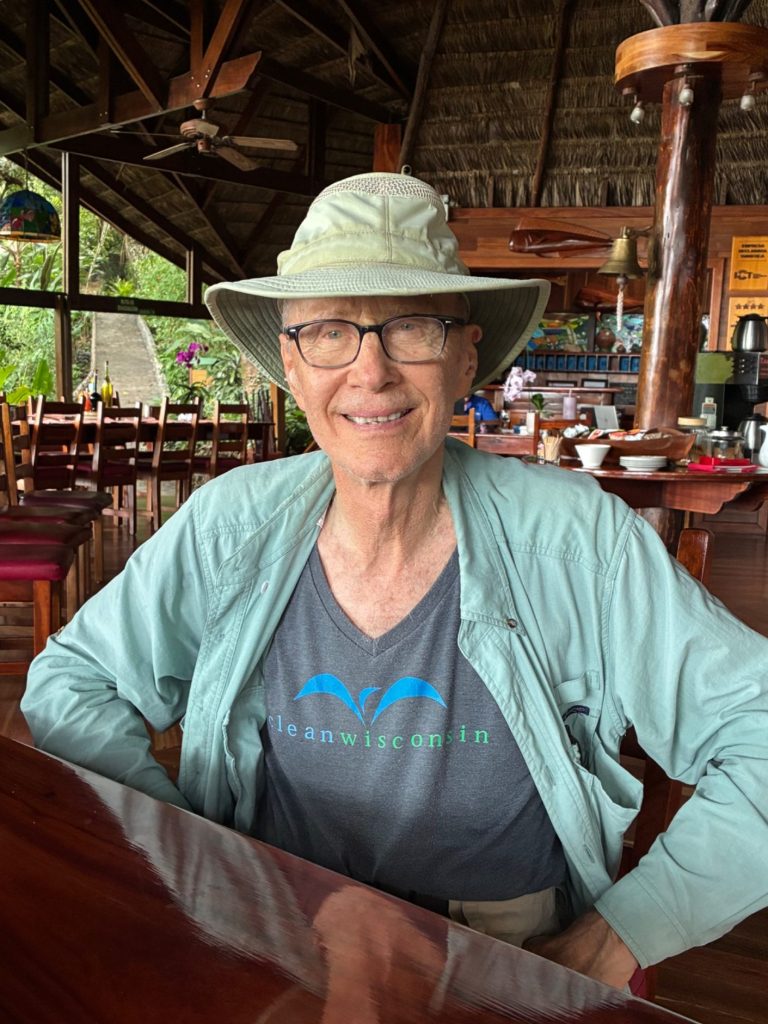
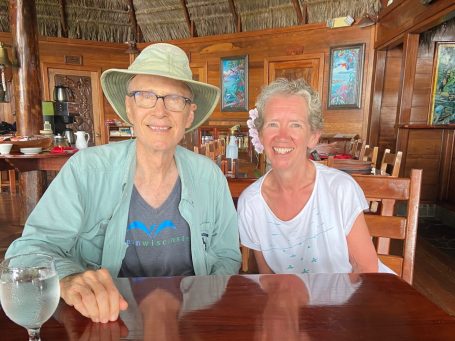
It is a beautiful, unspoilt corner of the world and therefore a fitting place for a chance encounter with one of the original founders of Earth Day back in 1970: a pioneer of the environmental movement in the US, former Wisconsin Secretary of State, Doug La Follette.
Now 85, Mr La Follette was teaching organic chemistry at the University of Wisconsin back in the late 1960s when he first met and started working with Senator Gaylord Nelson, the US Senator for Wisconsin. Senator Nelson had earned the nickname ‘the Conservation Governor’ during his time as Governor of Wisconsin between 1958 and 1962. At that time, in the post-war era, the US was in the midst of a manufacturing and industrial boom time. But while the economy was growing and consumerism flourishing, the environment was paying a heavy cost. Senator Nelson became increasingly appalled at the pollution in the air and rivers, not just in beautiful upstate Wisconsin but throughout the US. He decided to do something about it.
Mr La Follette says: “One of the things Gaylord was most concerned about was the high levels of BOD in our rivers. BOD (Biochemical Oxygen Demand) is a measure of the dissolved oxygen in water used by microorganisms to decompose organic matter. A high BOD level means the river is badly polluted and ours were dying.”
Senator Nelson came up with the idea of the first Earth Day in 1970. Inspired by the growing anti-Vietnam War movement in American universities, Earth Day was originally conceived as a series of campus teach-ins led by Denis Hayes, who was recruited by Senator Nelson to mastermind the day. Doug La Follette, based at the University, organised the Wisconsin events.
The original Earth Day, on April 22nd 1970, was a huge success with 20 million people taking part, but it wasn’t until 1980 that the movement began to go global. On the 50th anniversary event in 2020 an estimated 1 billion people took part in 160 countries around the globe.
Mr La Follette remains remarkably humble about the impact of Earth Day and seemed delighted that I, a Brit from the Home Counties, had heard of it. However, despite his involvement as a founding member of one of the environmental movement’s most impactful events, the legacy of which he is most proud is his role in co-founding (with his colleague Peter Anderson and Senator Nelson again) the organisation that has come to be known as Clean Wisconsin. (He was proudly wearing a Clean Wisconsin t-shirt when we met in Costa Rica.)
He says: “Having got involved in the early environmental movement, I decided to move into politics myself to try to make a difference. I first ran for office as an anti-war*, pro-environment Democratic candidate in 1970 but I lost by 24 votes on a recount.” Undeterred, he stood again and was elected to the State Senate of Wisconsin in 1973 and in 1974 he was elected Secretary of State. He served from 1974 to 1979 and from 1983 to 2023, only retiring two years ago at the age of 83.
“We followed up the first Earth Day by founding a movement called Wisconsin’s Environmental Decade but that decade extended by necessity so in 2003 it was re-named Clean Wisconsin” he says. The state of Wisconsin covers a larger land mass than England and for over fifty years the organisation he co-founded has fought for environmental improvements in the state’s air, water and land and to protect its natural resources.
Mr La Follette has dedicated his life and career to environmental causes. In 1992 he published a book The Survival Handbook – A Strategy for Saving Planet Earth. He has been a vegetarian for over 50 years (“the emissions from beef production alone are something else”), he has served on the board of directors of Friends of the Earth and for many years was a popular speaker on the history of the environmental movement.
Asked about his views on the climate action movement today, Mr La Follette says: “First of all, I think we need a change of nomenclature. We started off calling it global warming, but we realised that didn’t work because some people in the coldest parts of the world thought that was a good thing. It gets pretty cold in Wisconsin in winter you know. So we started talking about climate change, but even that is unsatisfactory because we all know change can be good thing. The trajectory we are on is not a good thing, so I believe we should call it climate disruption. Some places will get hotter, others colder, some wetter, some dryer. It’s total disruption of our climate and that is what we should call it.”
He won’t be drawn on Donald Trump’s environmental credentials at first. “What is is there to say?” he shrugs, with a look of disgust. But then he adds: “The damage he is doing is astonishing.”
Overall, he believes the outlook for the planet is bleak. “I’m 85 so I won’t see it, but our grandchildren will and I worry for them.” Is there anything we can do? I ask. “I think we could still change things, but the chances of it happening are one in a million. We’d need to stop all fossil fuel consumption overnight and switch to renewables and we’d need to introduce a global one-child only policy for 50 years, to allow the global population to decline. When we started Earth Day in 1970 the population was 3.9 billion and we thought we were stretching things to the limit then. Today our population is more than double that and the future is very worrying.”
This second suggestion is controversial and I don’t necessarily agree, but it might be helpful to understand the context. Mr La Follette knew Paul Ehrlich (even standing in for him as a speaker on several occasions) and was heavily influenced by his seminal 1968 book, The Population Bomb. Ehrlich linked population growth to global survival and there is no doubt that the book, which sold millions, helped to shape the attitudes of many 1970s environmental campaigners like Mr La Follette.
Today we are more aware of the impacts of consumption and the global distribution of resources, rather than population numbers per se. So as someone who advocates the idea that we can (and should) all make a difference to our carbon emissions, however small, it was hard to hear that from a pioneer in the environmental movement. But it is also hard not to share some of his cynicism, especially with the current state of affairs in the White House where the most powerful world leader claims that climate change is ‘a hoax’.
Despite ending on a rather depressing note, it was a joy to talk with Doug La Follette. They say you should never meet your heroes; in this case I beg to differ. It was a privilege to meet someone who was there at the start of one of the most impactful cultural and political catalysts for environmental change - Earth Day. It is people like him who got the ball rolling. I will be raising a glass to him and his colleagues next April 22nd.
* Vietnam War
©️ Text by Gill Coates. This interview was carried out with the agreement of Doug La Follette and he approved the text. It is reproduced here with his permission.
(Photos: Above left - Doug La Follette . Below (l-r) - dolphins in Drake Bay; Doug La Follette and Gill Coates; approaching Drake Bay via a mangrove swamp.)
12
OCT
2025
Another Successful Nature & Climate Festival in Thames Ditton…
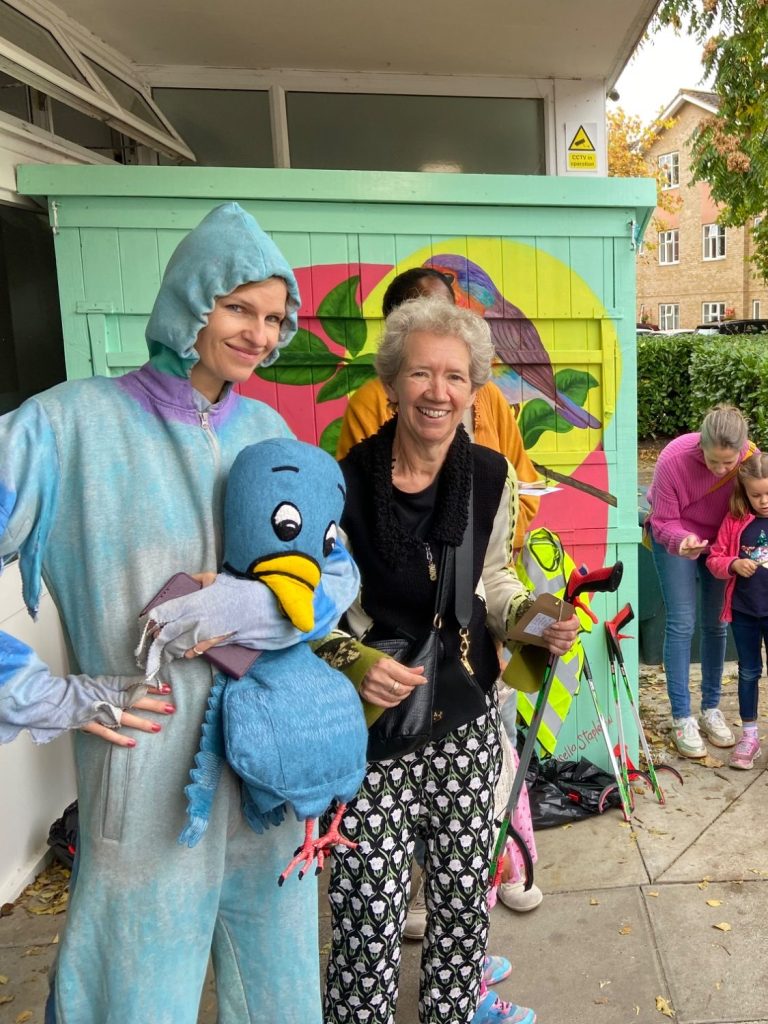
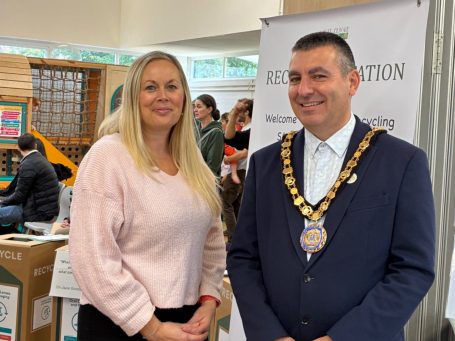
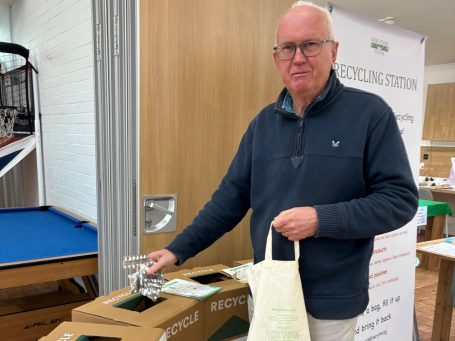
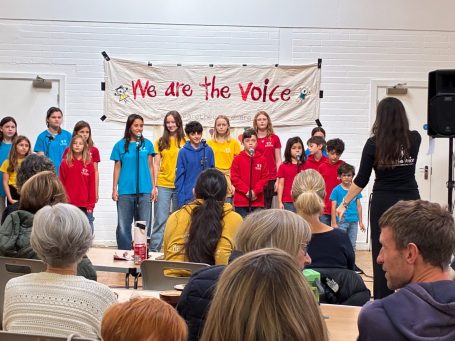
For three days from 10-12 October 2025 Vital Village hosted the fourth Nature & Climate Festival. Residents took part in recycling and upcycling and enjoyed talks on Plants for Health & Wellbeing and the Natural History of Elmbridge and its Commons and they had a chance to go on a foraging walk. Children went on a litter pick with the Tap Dancing Pigeon of Covent Garden and created creatures with the David Shepherd Wildlife Foundation, and we enjoyed music from Graham Cooke and We Are the Voice. Visitors came from as far away as Kingswood, Stonelight and Claygate! Great to share our vision for sustainable communities in Surrey.
(Photos: Left - Author Serena Hassan and Gill Coates; below l-r - Mayor of Elmbridge, CllrSteve Bax, with Lucy Roshier of sponsors Killik & Co; a resident using the new Recycling Station at Vital Village,;We Are the Voice children’s environmental choir in concert.)
12
OCT
2025
Nature & Climate Festival tech collection with Relove
Technology
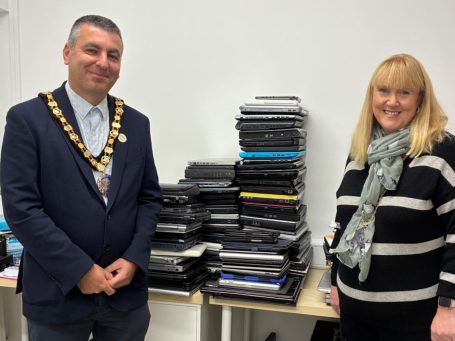
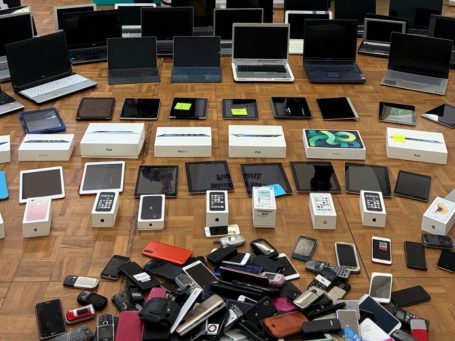
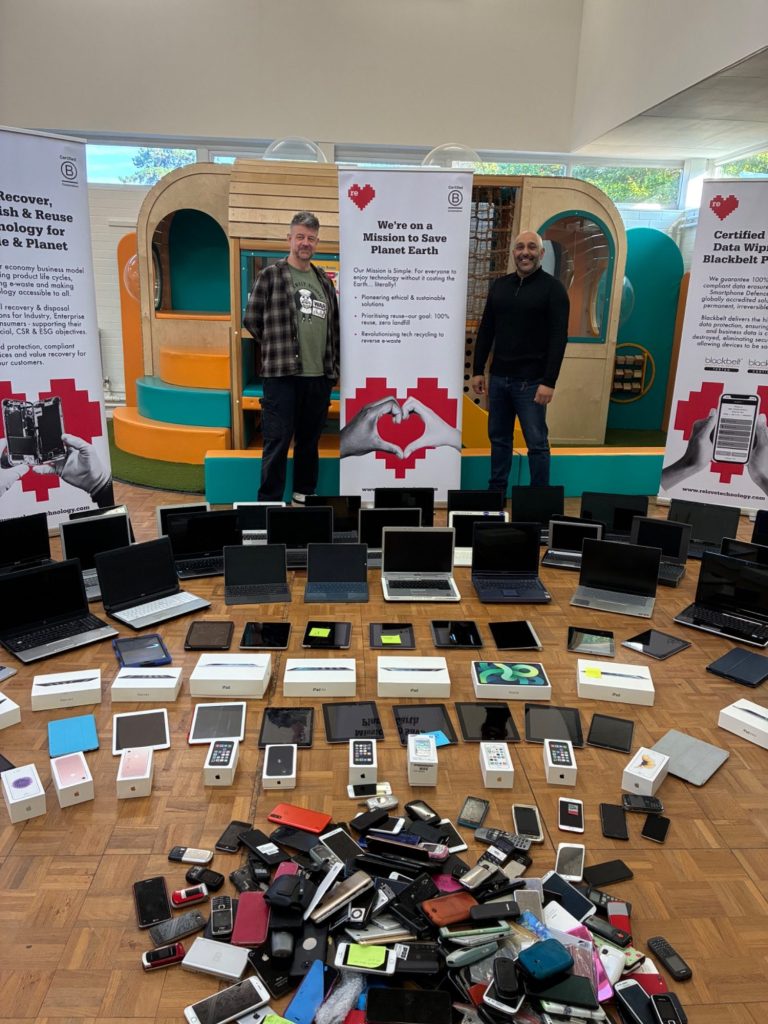
We partnered with Relove Technology to organise a tech collection of pre-loved mobile technology including phones, laptops and iPads. This is the haul! Proceeds will be split between the Mayor of Elmbridge’s charity (Community Fund for Elmbridge) and the David Shepherd Wildlife Fund. A recent study for the Chartered Institution of Wastes Management showed that every repurposed laptop has a social value of £4300. Looking at this pile, that’s over £100,000 social impact - not to mention the carbon savings! Well done people of Thames Ditton & Weston Green!
(Photos: Left - Relove Technology’s Paul Crossman and Gurjit Dhillon display the haul .Below, l-r - Mayor of Elmbridge, Cllr ,Steve Bax and Lady Mayoress Kim Bax; what a lot of old tech!; our Circular Economy symbol designed by Lisa Tolley.)